Showing posts with label John Hughes. Show all posts

Friday, August 9, 2019

Thank You, John Hughes (a Re-Post)


Some of my most pleasant memories of being a teen in the '80s came from some of the better teen movies which flourished at that time. Foremost among the creators of this genre of moviemaking was the great John Hughes whose work during the '80s was known for treating the minds and feelings of teenagers, and the situations that teens found themselves in, with seriousness and respect.

Hughes created such teen classics as Weird ScienceSixteen CandlesFerris Bueller's Day Offand Pretty In Pink, movies which were big in their day, and have since become cult classics, and the source of much imitation in the form of subsequent teen oriented flicks. Hughes also went beyond the teen movie genre to make such films as the holiday classic Home Alone and the comedy Planes, Trains and Automobiles.  But Hughes' creation which, for many of us, still resonates most strongly was the teen classic The Breakfast Club.


An account of several teens from very different cliques bonding with one another during their stay in detention, The Breakfast Club served for many of us as a protest against the walls that separated us from our fellow teens. It also had an unusual depth for a teen flick, allowing its characters to express the complexity which lay behind the facades of various teen stereotypes. Kids who were as different as a nerd, a stoner, an arty outsider, a jock and a preppie suddenly seemed more than just one dimensional. I remember getting great pleasure out of the way this movie made you think, as you chewed on the dialogue going on between the characters on the screen.


But the thing that made The Breakfast Club, and all of Hughe's movies, so wonderful for a teen loner like me, is that Hughes had a particular soft spot for the outsiders, the individualists, and the misfits, and he had a great way of exposing their dilemma through his movies, and ultimately empowering them in the process.

For example, there is this scene in the Breakfast Club, where the jock character, played by Emilio Estevez, tells about an awful thing, a pitiless prank that he played on this nerdy kid. He had done it to impress his fellow jock friends, but in the movie, he was expressing how bad he felt over his part in such a cruel prank, and how awful he must have made that hapless boy feel. At the conclusion of the jock's account, the nerd character, played by Anthony Michael Hall, quietly mentions that the boy who was the target of the prank was one of his friends. The scene is powerful, and there is this painful awareness as the nerd and the jock realize how close this awful prank struck each of them.

Thank you, John Hughes, for moments like that, which exposed the pain of being an outsider, and brought home just how much we had in common as teens from different backgrounds.


John Wilden Hughes (1950-2009)


A Follow Up To The Above:


I've been enjoying reading a book called Don't You Forget About Me: Contemporary Writers on the films of John Hughes.  Its a collection of essays where different writers describe the effect that John Hughes movies have had on them as teens. Very often this effect is quite strong, and ground-breaking, causing an effect on the consciousness of those observers.

I, too, have found the teen films of the '80s to have had a significant and important effect on society, much more so than would be acknowledged by those who would casually dismiss them.  One such essay described an experience the writer had which shows this effect.  In the essay "A Slut or a Prude: The Breakfast Club as Feminist Primer," writer Juliana Baggott wrote about the following incident which happened after watching that seminal Hughes movie.

 A few days after I saw the movie, I was in the cafeteria with my people- a group of field hockey girls, a few with eating disorders. Some idiotic football players were spitting spitballs at some band geeks. But they weren't just football players and band geeks, not after The Breakfast Club. We were all trapped in the same ugly, dying organism: high school.

I walked over to the football players and said,”C'mon, knock it off.”

One said,”Knock what off.”

“The spitballs. Just grow up a little.”

“Don't I look grown up to you, little girl.” He had me by a hundred pounds and more than a half foot in height.

“Listen, asshole, just stop it with the spitballs.”

“Oh, she's angry now.” He put his arm around me, rubbed my back. “Isn't she cute when she's angry?”

“Cute” was my trigger word- often true for short people. “Don't call me cute again.”

“What's wrong cutie. You're so cute!”

“I mean it. Call me cutie again and I swear it won't be pretty. . . ”

He paused and looked at me deeply in the eyes. “You're so cute.”

I slapped him. He had a big head and a thick rubbery cheek. He was fair, and the skin went red fast. Friends told me later that my small handprint was on his cheek for the rest of the day.

The long term result was astonishing. All of the boys at that table seemed to fall in love with me and treated me with enormous respect. They addressed me politely in the halls. I'd feel someone watching me, and when I turned around, it would be one of them- all agaze.

It made no sense. It only encouraged me. To what? Refuse to accept a definition – a prude, a slut, a . I knew that definitions wouldn't work for me, that I was volatile, unwieldy, and that was the only way I'd survive.

This wonderful movie by John Hughes caused a typical American teenager to feel closer to the other teens in her school, to literally stand up for other teens who were different than herself, to confront a blustering bully, and to see her own self in a different light.  Thank you, John Hughes, or your remarkable work. 


Thursday, May 31, 2018

Thank You, John Hughes (Re-post)


Some of my most pleasant memories of being a teen in the '80s came from some of the better teen movies which flourished at that time. Foremost among the creators of this genre of moviemaking was the great John Hughes whose work during the '80s was known for treating the minds and feelings of teenagers, and the situations that teens found themselves in, with seriousness and respect.

Hughes created such teen classics as Weird ScienceSixteen CandlesFerris Bueller's Day Offand Pretty In Pink, movies which were big in their day, and have since become cult classics, and the source of much imitation in the form of subsequent teen oriented flicks. Hughes also went beyond the teen movie genre to make such films as the holiday classic Home Alone and the comedy Planes, Trains and Automobiles.  But Hughes' creation which, for many of us, still resonates most strongly was the teen classic The Breakfast Club.


An account of several teens from very different cliques bonding with one another during their stay in detention, The Breakfast Club served for many of us as a protest against the walls that separated us from our fellow teens. It also had an unusual depth for a teen flick, allowing its characters to express the complexity which lay behind the facades of various teen stereotypes. Kids who were as different as a nerd, a stoner, an arty outsider, a jock and a preppie suddenly seemed more than just one dimensional. I remember getting great pleasure out of the way this movie made you think, as you chewed on the dialogue going on between the characters on the screen.


But the thing that made The Breakfast Club, and all of Hughe's movies, so wonderful for a teen loner like me, is that Hughes had a particular soft spot for the outsiders, the individualists, and the misfits, and he had a great way of exposing their dilemma through his movies, and ultimately empowering them in the process.

For example, there is this scene in the Breakfast Club, where the jock character, played by Emilio Estevez, tells about an awful thing, a pitiless prank that he played on this nerdy kid. He had done it to impress his fellow jock friends, but in the movie, he was expressing how bad he felt over his part in such a cruel prank, and how awful he must have made that hapless boy feel. At the conclusion of the jock's account, the nerd character, played by Anthony Michael Hall, quietly mentions that the boy who was the target of the prank was one of his friends. The scene is powerful, and there is this painful awareness as the nerd and the jock realize how close this awful prank struck each of them.

Thank you, John Hughes, for moments like that, which exposed the pain of being an outsider, and brought home just how much we had in common as teens from different backgrounds.


John Wilden Hughes (1950-2009)


A Follow Up To The Above:


I've been enjoying reading a book called Don't You Forget About Me: Contemporary Writers on the films of John Hughes.  Its a collection of essays where different writers describe the effect that John Hughes movies have had on them as teens. Very often this effect is quite strong, and ground-breaking, causing an effect on the consciousness of those observers.

I, too, have found the teen films of the '80s to have had a significant and important effect on society, much more so than would be acknowledged by those who would casually dismiss them.  One such essay described an experience the writer had which shows this effect.  In the essay "A Slut or a Prude: The Breakfast Club as Feminist Primer," writer Juliana Baggott wrote about the following incident which happened after watching that seminal Hughes movie.


 A few days after I saw the movie, I was in the cafeteria with my people- a group of field hockey girls, a few with eating disorders. Some idiotic football players were spitting spitballs at some band geeks. But they weren't just football players and band geeks, not after The Breakfast Club. We were all trapped in the same ugly, dying organism: high school.

I walked over to the football players and said,”C'mon, knock it off.”

One said,”Knock what off.”

“The spitballs. Just grow up a little.”

“Don't I look grown up to you, little girl.” He had me by a hundred pounds and more than a half foot in height.

“Listen, asshole, just stop it with the spitballs.”

“Oh, she's angry now.” He put his arm around me, rubbed my back. “Isn't she cute when she's angry?”

“Cute” was my trigger word- often true for short people. “Don't call me cute again.”

“What's wrong cutie. You're so cute!”

“I mean it. Call me cutie again and I swear it won't be pretty. . . ”

He paused and looked at me deeply in the eyes. “You're so cute.”

I slapped him. He had a big head and a thick rubbery cheek. He was fair, and the skin went red fast. Friends told me later that my small handprint was on his cheek for the rest of the day.

The long term result was astonishing. All of the boys at that table seemed to fall in love with me and treated me with enormous respect. They addressed me politely in the halls. I'd feel someone watching me, and when I turned around, it would be one of them- all agaze.

It made no sense. It only encouraged me. To what? Refuse to accept a definition – a prude, a slut, a . I knew that definitions wouldn't work for me, that I was volatile, unwieldy, and that was the only way I'd survive.

This wonderful movie by John Hughes caused a typical American teenager to feel closer to the other teens in her school, to literally stand up for other teens who were different than herself, to confront a blustering bully, and to see her own self in a different light.  Thank you, John Hughes, or your remarkable work. 


Friday, January 26, 2018

Simple Minds - "Don't You (Forget About Me)"

Here's an absolute '80s classic: Simple Minds' "Dont You (Forget About Me)," which was featured in the seminal 1985 John Hughes movie The Breakfast Club.  The song always seemed to me to have a somewhat anthemic quality to it, and a sentiment symbolic of '80s teens who took many of those teen movies to heart. I was one of them.  The video also reminds you of how fresh, lively and even cutting edge the art of music video was at the time.

Saturday, July 22, 2017

Oingo Boingo: From Gong Show To Weird Science


The name Oingo Boingo brings to mind the quirky new wavish '80s for many of us. But the group has a more extensive history.  It started back in the early '70s as a performance art group called The Mystic Knights of the Oingo Boingo.  One of their more noteworthy performances at that time came in 1976, when they appeared as contestants on the original version of The Gong Show with their then wacky host Chuck Barris. (Acknowledgement to Dawson Lehman for the video.)


In the '80s came New Wave, a genre the group took to well, changing their name to simply Oingo Boingo, and adopting a ska-influenced New Wave style.  Here's my fave song from them, the very catchy "Stay" off of their Dead Man's Party album.  (Acknowledgement to Boingo Vision for the video.)


They are probably most well known for the theme song to the very '80s John Hughes film Weird Science in 1985.  (Acknowledgement to NewOrderUp for the video.)

In the '90s, they briefly shortened their name even further, to Boingo, and followed new musical directions.  The group's frontman, Danny Elfman also made a name for himself with his work on movie soundtracks, including Pee Wees Big Adventure and Men in Black.


Friday, July 14, 2017

The Dream Academy (Life In A Northern Town)

The Dream Academy is a unique '80s group whose work has included elements of psychedelia, melodic pop, classical music, and ethereal chanting. The combined effect is quite magical. 


The group's most well-known song was the extremely popular 1985 hit "Life In A Northern Town." The song was intended in part as a tribute to '70s musician Nick Drake, and contained melancholy references to '60s memories, mentioning specifically JFK and the Beatles. Its quite a haunting, sentimental record.  The song and the album from which it came were co-produced by David Gilmour of Pink Floyd, with whom the band often collaborated.

In 1986, the band also did a dreamy version of the Smiths' "Please, Please, Please, Let Me Get What I Want."  This was the song that played in the background during the museum scenes in Ferris Bueller's Day Off.


Here's one more from Dream Academy: the follow up single to "Northern Town," called "The Love Parade." 

(Acknowledgement and thanks to The Dream Academy for the videos.)

Saturday, October 22, 2016

The Greatness of John Hughes, Revisited

I've been enjoying reading a book called Don't You Forget About Me: Contemporary Writers on the films of John Hughes.  Its a collection of essays where different writers describe the effect that John Hughes movies have had on them as teens. Very often this effect is quite strong, and ground-breaking, causing an effect on the consciousness of those observers.

I, too, have found the teen films of the '80s to have had a significant and important effect on society, much more so than would be acknowledged by those who would casually dismiss them.  One such essay described an experience the writer had which shows this effect.  In the essay "A Slut or a Prude: The Breakfast Club as Feminist Primer," writer Juliana Baggott wrote about the following incident which happened after watching that seminal Hughes movie.


 A few days after I saw the movie, I was in the cafeteria with my people- a group of field hockey girls, a few with eating disorders. Some idiotic football players were spitting spitballs at some band geeks. But they weren't just football players and band geeks, not after The Breakfast Club. We were all trapped in the same ugly, dying organism: high school.

I walked over to the football players and said,”C'mon, knock it off.”

One said,”Knock what off.”

“The spitballs. Just grow up a little.”

“Don't I look grown up to you, little girl.” He had me by a hundred pounds and more than a half foot in height.

“Listen, asshole, just stop it with the spitballs.”

“Oh, she's angry now.” He put his arm around me, rubbed my back. “Isn't she cute when she's angry?”

“Cute” was my trigger word- often true for short people. “Don't call me cute again.”

“What's wrong cutie. You're so cute!”

“I mean it. Call me cutie again and I swear it won't be pretty. . . ”

He paused and looked at me deeply in the eyes. “You're so cute.”

I slapped him. He had a big head and a thick rubbery cheek. He was fair, and the skin went red fast. Friends told me later that my small handprint was on his cheek for the rest of the day.

The long term result was astonishing. All of the boys at that table seemed to fall in love with me and treated me with enormous respect. They addressed me politely in the halls. I'd feel someone watching me, and when I turned around, it would be one of them- all agaze.

It made no sense. It only encouraged me. To what? Refuse to accept a definition – a prude, a slut, a . I knew that definitions wouldn't work for me, that I was volatile, unwieldy, and that was the only way I'd survive.

This wonderful movie by John Hughes caused a typical American teenager to feel closer to the other teens in her school, to literally stand up for other teens who were different than herself, to confront a blustering bully, and to see her own self in a different light.  Thank you, John Hughes, or your remarkable work.  I use this account as a preface to a re-posting of my previous tribute to John Hughes, which appears below.


Thank You, John Hughes

(first posted on September 20, 2011)


Some of my most pleasant memories of being a teen in the '80s came from some of the better teen movies which flourished at that time. Foremost among the creators of this genre of moviemaking was the great John Hughes whose work during the '80s was known for treating the minds and feelings of teenagers, and the situations that teens found themselves in, with seriousness and respect.

Hughes created such teen classics as Weird Science, Sixteen Candles, Ferris Bueller's Day Off, and Pretty In Pink, movies which were big in their day, and have since become cult classics, and the source of much imitation in the form of subsequent teen oriented flicks. Hughes also went beyond the teen movie genre to make such films as the holiday classic Home Alone and the comedy Planes, Trains and Automobiles.  But Hughes' creation which, for many of us, still resonates most strongly was the teen classic The Breakfast Club.


An account of several teens from very different cliques bonding with one another during their stay in detention, The Breakfast Club served for many of us as a protest against the walls that separated us from our fellow teens. It also had an unusual depth for a teen flick, allowing its characters to express the complexity which lay behind the facades of various teen stereotypes. Kids who were as different as a nerd, a stoner, an arty outsider, a jock and a preppie suddenly seemed more than just one dimensional. I remember getting great pleasure out of the way this movie made you think, as you chewed on the dialogue going on between the characters on the screen.

But the thing that made The Breakfast Club, and all of Hughe's movies, so wonderful for a teen loner like me, is that Hughes had a particular soft spot for the outsiders, the individualists, and the misfits, and he had a great way of exposing their dilemma through his movies, and ultimately empowering them in the process.

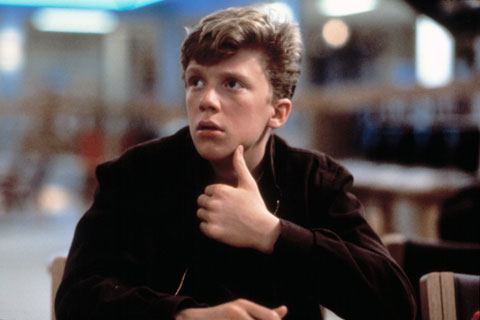
For example, there is this scene in the Breakfast Club, where the jock character, played by Emilio Estevez, tells about an awful thing, a pitiless prank that he played on this nerdy kid. He had done it to impress his fellow jock friends, but in the movie, he was expressing how bad he felt over his part in such a cruel prank, and how awful he must have made that hapless boy feel. At the conclusion of the jock's account, the nerd character, played by Anthony Michael Hall, quietly mentions that the boy who was the target of the prank was one of his friends. The scene is powerful, and there is this painful awareness as the nerd and the jock realize how close this awful prank struck each of them.

Thank you, John Hughes, for moments like that, which exposed the pain of being an outsider, and brought home just how much we had in common as teens from different backgrounds.


John Wilden Hughes (1950-2009)


Sunday, January 12, 2014

Ferris Bueller


Although my fave John Hughes movies growing up have always been the ones that dealt directly with teen issues, like The Breakfast Club (1985) and Pretty in Pink (1986), lately I've been enjoying a Hughes classic with a bit of a lighter style: 1986's Ferris Bueller's Day Off.  The title character was a jack of all trades who could get away with everything, and his day off involved sneaking his girlfriend and best friend out of school for a day of playing hookie while enjoying the sites and sounds of '80s Chicago.


Their trip includes visits to a such Chicago landmarks as Wrigley Field, the Mercatile Exchange and Sears Tower.


My favorite scene in the whole movie involved the trio's visit to a Chicago museum, a smooth and contemplative foray into the world of art amidst an otherwise hectic day. I love this scene.


But probably the most memorable scene came near the end of the visit, as Bueller crashes the Von Steuben Day parade, with a musical sequence containing tunes from Wayne Newton and the Beatles.

Altogether, a pleasant and light reminder of what I love about the '80s.

Tuesday, September 20, 2011

Thank you, John Hughes


Some of my most pleasant memories of being a teen in the '80s came from some of the better teen movies which flourished at that time. Foremost among the creators of this genre of moviemaking was the great John Hughes whose work during the '80s was known for treating the minds and feelings of teenagers, and the situations that teens found themselves in, with seriousness and respect.

Hughes created such teen classics as Weird Science, Sixteen Candles, Ferris Bueller's Day Off, and Pretty In Pink, movies which were big in their day, and have since become cult classics, and the source of much imitation in the form of subsequent teen oriented flicks. Hughes also went beyond the teen movie genre to make such films as the holiday classic Home Alone and the comedy Planes, Trains and Automobiles.  But Hughes' creation which, for many of us, still resonates most strongly was the teen classic The Breakfast Club.


An account of several teens from very different cliques bonding with one another during their stay in detention, The Breakfast Club served for many of us as a protest against the walls that separated us from our fellow teens. It also had an unusual depth for a teen flick, allowing its characters to express the complexity which lay behind the facades of various teen stereotypes. Kids who were as different as a nerd, a stoner, an arty outsider, a jock and a preppie suddenly seemed more than just one dimensional. I remember getting great pleasure out of the way this movie made you think, as you chewed on the dialogue going on between the characters on the screen.


But the thing that made The Breakfast Club, and all of Hughe's movies, so wonderful for a teen loner like me, is that Hughes had a particular soft spot for the outsiders, the individualists, and the misfits, and he had a great way of exposing their dilemma through his movies, and ultimately empowering them in the process.

For example, there is this scene in the Breakfast Club, where the jock character, played by Emilio Estevez, tells about an awful thing, a pitiless prank that he played on this nerdy kid. He had done it to impress his fellow jock friends, but in the movie, he was expressing how bad he felt over his part in such a cruel prank, and how awful he must have made that hapless boy feel. At the conclusion of the jock's account, the nerd character, played by Anthony Michael Hall, quietly mentions that the boy who was the target of the prank was one of his friends. The scene is powerful, and there is this painful awareness as the nerd and the jock realize how close this awful prank struck each of them.

Thank you, John Hughes, for moments like that, which exposed the pain of being an outsider, and brought home just how much we had in common as teens from different backgrounds.


John Wilden Hughes (1950-2009)